What is Healthy Vision Month?
May is Healthy Vision Month—and Visionworks wants to help you keep your eyes healthy year-round.
May is Healthy Vision Month. At Visionworks, our team is dedicated to helping you keep your eyes healthy every month of the year. Diseases like age-related macular degeneration, cataracts, diabetic retinopathy and glaucoma affect millions of individuals, leading to vision impairment and even blindness—so prevention is key! During Healthy Vision Month, we want to bring awareness to these eye diseases and help you reduce the risk of vision loss by maintaining regular eye health practices. Let’s take a look at what Healthy Vision Month is all about and the common eye diseases to monitor with your eye doctor. Plus, our team shares four tips you can act on year-round for healthy vision.
When is Healthy Vision Month?
May is Healthy Vision Month. It is a great time to spread awareness of the most common eye diseases, their symptoms and means of prevention. However, of course it is important to maintain good eye health habits throughout the year.
What is Healthy Vision Month?
Healthy Vision Month raises awareness for the most common eye diseases affecting vision, including macular degeneration, cataracts, diabetic retinopathy and glaucoma. According to the American Academy of Ophthalmology, over 37 million adults in the United States suffer from one of these diseases. Many of those affected experience vision loss and even blindness. However, recent studies show that making healthy choices and getting regular eye exams can help reduce a person’s risk of vision loss. During Healthy Vision Month, we encourage everyone to learn more about these eye diseases, their effects and how to reduce the chances of vision loss through good eye health practices.
The Most Common Eye Diseases and How They Affect You
Here are four of the most common eye diseases and their effects.
Age-related Macular Degeneration
Age-related macular degeneration (AMD) is the leading cause of vision loss in individuals over 60. AMD is the breakdown of the macula, the central point of focus in the retina, caused by thinning tissue in the eye that may deteriorate during the aging process. Damage to the macula blurs central vision and may worsen over time. Common symptoms include blurry vision, straight lines appearing wavy and color blindness. While there is no cure for AMD, early detection and treatment help reduce symptoms and preserve vision.

Cataracts
Cataracts develop when the normal proteins on the eye's lens break down and accumulate in cloudy clusters. Over time this buildup can worsen and grow larger, if left untreated, leading to complete blindness. The leading cause of cataracts is aging. However, they can also form after eye injuries or other trauma. Symptoms include sensitivity to light, desaturated colors and cloudy vision. An ophthalmologist, a medical doctor who specializes in diseases and surgery of the eye, performs surgery to remove cataracts.
Diabetic Retinopathy
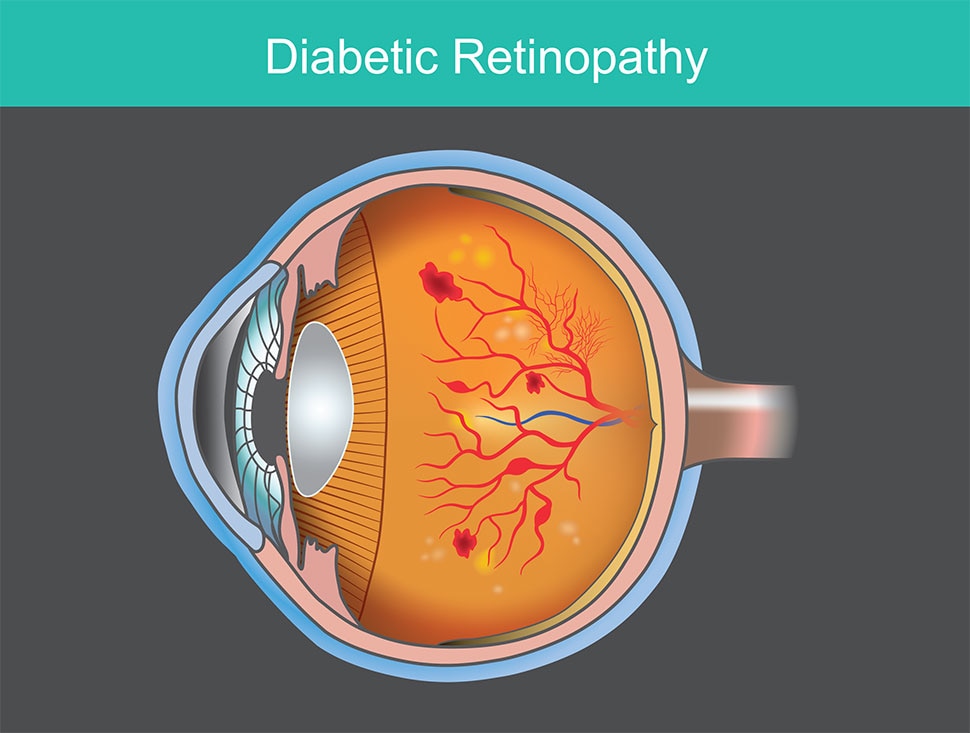
Diabetic retinopathy is a common diabetes complication affecting the retina, the part of the eye that receives light and converts it into neural signals, which the brain interprets into visual recognition. When blood sugar levels get too high, they can damage blood vessels and tissue at the back of the eye, causing abnormal blood vessels to form on the retina. Once the retina stops receiving the usual amount of blood flow, vision problems and even blindness can occur. Symptoms include vision changes, floaters and poor night vision. Injections, laser treatment and eye surgery can treat the condition.
Glaucoma
Glaucoma is a disease resulting from increased pressure in the eye, damaging the optic nerve, which is responsible for sending visual images to the brain. This increased pressure results from abnormally high fluid production or a decrease in the eye's ability to drain fluid. Glaucoma worsens over time if left untreated and can lead to permanent damage of the optic nerve—and vision loss or blindness. People don’t typically experience symptoms of glaucoma until vision loss starts to occur, so it is important to have regular eye exams to check pressure levels. While there is no cure for glaucoma, treatment options are available to manage the disease.
4 Tips for Healthier Vision
Achieve healthier vision with these four easy tips.
Schedule Yearly Eye Exams
The best way to maintain healthy vision and prevent the advancement of eye diseases is to schedule annual eye exams. Eye exams aren’t just for updating your vision prescription. Your eye doctor also checks for signs of major eye diseases and overall bodily health. Focus on prevention and catch the first signs of eye disease before vision loss occurs.
Know Your Risk
Certain risk factors put you at a higher risk of eye disease. For example, a family history of macular degeneration may mean you have a higher risk of developing the condition as you age. Contracting diabetes puts you at a higher risk for diabetic retinopathy. The effects of past eye trauma and smoking can increase the risk of cataracts and glaucoma. In addition, the risk of most eye diseases increases with age. Talk to your doctor about your risk factors during your next eye exam.
Maintain Whole Body Health
Maintaining an active lifestyle and a healthy diet is good for your entire body, including your eyes. Those who exercise regularly and eat a diet rich in omega-3 fatty acids, vitamin A and vitamin C are less likely to develop eye health issues than those who eat a diet of sugar and fried foods. Make sure you incorporate the 10 best foods for your eye health in your diet. Remember, foods that are good for your heart are also good for your eyes!
Wear Proper Eyewear
Wearing the proper eyewear for the task at hand is crucial in maintaining healthy vision for life. When outdoors, wear sunglasses with full-spectrum UVA and UVB protection to shield your eyes from the sun’s ultraviolet rays. When working on a construction job or with dangerous chemicals, wear protective eyewear to keep your eyes safe from debris and splashes. When staying up late on the computer, consider wearing glasses with blue light filtering lenses to relieve the symptoms of digital eye strain. As always, ensure your prescription is up-to-date so you can have the clearest vision possible for the task at hand.
Let’s Keep Your Eyes Healthy Year-round
At Visionworks, we care about your eye health. So whether you need a new pair of frames, custom safety glasses or an annual eye exam, our team has you covered at a Visionworks store near you.
Information received through Visionworks® content is for informational purposes only and does not constitute medical advice, medical recommendations, diagnosis, or treatment. Always seek the advice of your eye doctor, physician, or other qualified health provider with any questions you may have regarding a medical condition.
Claims regarding blue light efficiency are supported by manufacturer-provided test results.